
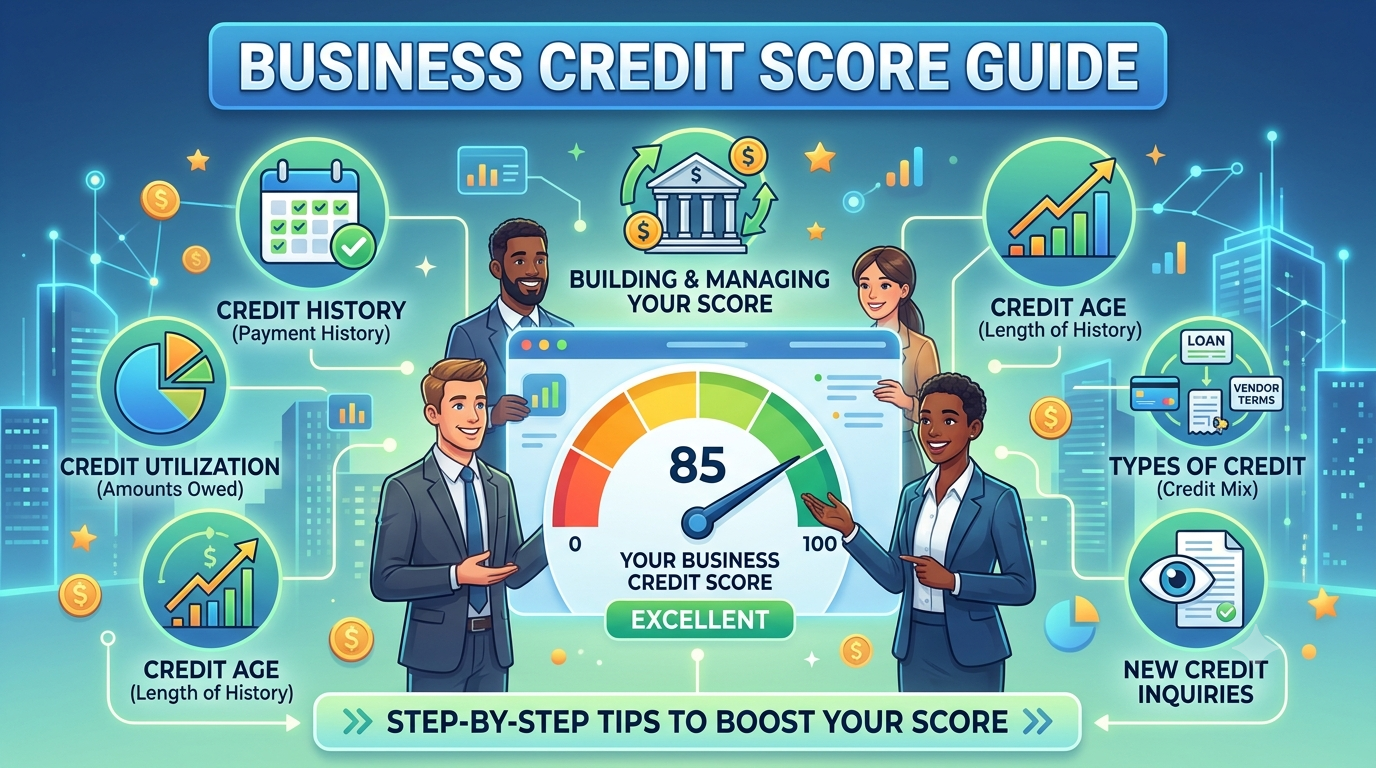
Running a business involves far more than selling a product or delivering a service. Behind the scenes, there is a financial identity attached to every company — one that lenders, suppliers, insurers, and even potential business partners rely on to decide whether they can trust you with credit, favorable payment terms, or a partnership. This financial identity is captured in what is known as a business credit score.
Many entrepreneurs are familiar with personal credit scores because they affect everyday life — getting a car loan, renting an apartment, or applying for a credit card. However, a business credit score is a separate and often overlooked concept, even though it can significantly influence a company’s ability to grow, secure funding, and negotiate better deals. This guide explains what a business credit score is, how it works, why it matters, and how you can build and maintain a strong one.
What Is a Business Credit Score?
A business credit score is a numerical representation of a company’s creditworthiness. It is calculated based on the business’s financial behavior, such as how promptly it pays suppliers and lenders, how much debt it carries, its payment history, public records (like liens or bankruptcies), and the size and age of the business.
Unlike personal credit scores, which are tied to an individual’s Social Security number, business credit scores are tied to a company’s Employer Identification Number (EIN) or a similar business registration number. This means the score reflects the financial health and reliability of the business itself, separate from the personal finances of its owner.
Business credit scores are used by:
- Lenders and banks to determine loan eligibility and interest rates
- Suppliers and vendors to decide whether to extend trade credit or favorable payment terms
- Insurance companies to assess risk when setting premiums
- Potential business partners or investors to gauge financial stability before entering agreements
- Landlords when a business seeks to lease commercial space
How Business Credit Scores Are Calculated
Several credit reporting agencies calculate business credit scores, and each uses its own scoring model and scale. While the exact formulas are proprietary, most agencies consider a similar set of core factors:
1. Payment History
This is usually the most heavily weighted factor. It reflects whether the business pays its bills, loans, and supplier invoices on time. Late payments, missed payments, or accounts sent to collections can significantly lower the score.
2. Credit Utilization
Similar to personal credit scoring, this measures how much of the available credit a business is using. High utilization (using a large percentage of available credit) can signal financial strain, while low utilization suggests healthy cash flow management.
3. Company Size and Industry Risk
Some scoring models factor in the size of the business (revenue, number of employees) and the risk profile associated with its industry. Certain industries are statistically more prone to failure or slow payments, which can influence the score.
4. Length of Credit History
A longer track record of credit accounts and payment behavior generally contributes to a more stable and reliable score, much like personal credit history length.
5. Public Records
Bankruptcies, tax liens, judgments, and collections filed against the business are recorded and can significantly damage the score.
6. Trade References and Vendor Relationships
Some scoring models incorporate data reported directly by vendors and suppliers about how promptly a business pays its invoices.
Common Business Credit Scoring Models
Several major agencies provide business credit scores, and understanding their differences helps business owners know what to monitor:
- Dun & Bradstreet (D&B) PAYDEX Score: Ranges from 0 to 100, focused primarily on payment history. A higher score indicates payments are made on time or early.
- Experian Business Credit Score: Ranges from 0 to 100, incorporating payment trends, public records, and business demographics.
- Equifax Business Credit Risk Score: Ranges from 101 to 992, predicting the likelihood of severe delinquency.
- FICO Small Business Scoring Service (SBSS): Ranges from 0 to 300, often used by the U.S. Small Business Administration (SBA) and banks when evaluating loan applications.
Because each agency uses different data sources and scoring ranges, a business may have multiple, sometimes differing, scores. It’s advisable to periodically check reports from more than one agency to get a fuller picture.
Why a Business Credit Score Matters
A strong business credit score can open doors that might otherwise remain closed. Here’s why it matters:
Easier Access to Financing
Lenders use business credit scores to evaluate risk before approving loans or lines of credit. A strong score can mean faster approvals, higher credit limits, and more favorable repayment terms.
Better Interest Rates
Just as a high personal credit score can reduce the interest rate on a mortgage, a strong business credit score can help secure lower interest rates on business loans, ultimately saving money over time.
Improved Vendor and Supplier Terms
Vendors are more willing to offer net-30, net-60, or even net-90 payment terms to businesses with strong credit profiles, improving cash flow flexibility.
Separation of Personal and Business Finances
Building a solid business credit profile helps entrepreneurs avoid relying on personal credit or personal guarantees when seeking financing, which protects personal assets from business liabilities.
Enhanced Business Reputation
A good credit score signals reliability and financial discipline, which can be attractive to potential partners, investors, and even customers who research a company before making large purchases or signing contracts.
Insurance Premiums
Some insurers factor in business credit health when calculating premiums, meaning a stronger score could translate into lower insurance costs.
How to Build and Improve a Business Credit Score
Building strong business credit doesn’t happen overnight, but consistent, disciplined financial practices can steadily improve a company’s score over time.
1. Establish Your Business as a Separate Legal Entity
Register your business as an LLC, corporation, or similar structure, and obtain an EIN. This separates business credit from personal credit and is the foundation for building a distinct credit profile.
2. Open Business Bank Accounts and Credit Lines
Use dedicated business bank accounts and credit cards rather than personal accounts. This creates a clear financial trail tied to the business.
3. Register with Business Credit Bureaus
Proactively establish a profile with agencies like Dun & Bradstreet, Experian Business, and Equifax Business. Some bureaus require you to request a D-U-N-S Number or similar identifier to begin building a file.
4. Pay Bills Early or On Time
Since payment history is often the most influential factor, prioritize timely payments to lenders, suppliers, and creditors. Paying early, when possible, can further strengthen the score with certain models like PAYDEX.
5. Keep Credit Utilization Low
Avoid maxing out credit lines. Maintaining a lower utilization ratio demonstrates financial discipline and reduces perceived risk.
6. Build Relationships with Vendors Who Report Payment Data
Not all suppliers report payment activity to credit bureaus. Seek out vendors who do, so your responsible payment behavior is reflected in your credit file.
7. Monitor Your Business Credit Reports Regularly
Just as with personal credit, errors can appear on business credit reports. Regularly reviewing reports allows you to catch and dispute inaccuracies before they cause harm.
8. Diversify Credit Types
Having a mix of credit types, such as a business credit card, a line of credit, and a term loan, can demonstrate the ability to manage various forms of credit responsibly.
9. Avoid Legal and Financial Red Flags
Steer clear of situations that lead to liens, judgments, or bankruptcy filings, as these have a long-lasting negative impact on your score.
Common Mistakes That Hurt Business Credit Scores
- Mixing personal and business finances: This creates confusion and can prevent the business from building an independent credit history.
- Ignoring small vendor invoices: Even minor late payments to reporting vendors can add up and hurt the score.
- Not checking credit reports: Errors or fraudulent activity can go unnoticed for months, causing unnecessary damage.
- Overextending credit: Taking on too much debt relative to revenue can signal risk to lenders and bureaus.
- Assuming no news is good news: A lack of credit history is not the same as a good credit history. Businesses need active, reported credit relationships to build a strong score.
How Often Should You Check Your Business Credit Score?
Ideally, business owners should review their credit reports at least once a quarter, or more frequently if the business is actively seeking financing, entering major contracts, or expanding operations. Frequent monitoring helps identify issues early, track improvement over time, and ensure that the information being reported by creditors and vendors is accurate.
Frequently Asked Questions (FAQs)
1. What is considered a good business credit score? This depends on the scoring model. For example, with the D&B PAYDEX score, 80 or above is generally considered good, indicating payments are made on time or early. With Experian and Equifax models, scores closer to the higher end of their respective ranges typically reflect lower risk.
2. Does a business credit score affect my personal credit score? Generally, no. Business and personal credit scores are tracked separately. However, if a business owner provides a personal guarantee for a loan or uses personal credit for business expenses, negative business activity could indirectly affect personal credit.
3. How long does it take to build a business credit score? It can take anywhere from a few months to a couple of years to establish a solid business credit profile, depending on how quickly the business opens reporting credit accounts and maintains consistent payment behavior.
4. Can a new business have a credit score? Yes, but it may take time to generate enough data. New businesses should focus on establishing trade lines and accounts with vendors and lenders that report to business credit bureaus as early as possible.
5. Is it free to check a business credit score? Some agencies offer limited free access to basic credit information, while more detailed reports often come with a fee or require a subscription. Business owners should periodically invest in reviewing full reports to ensure accuracy.
6. Can a poor personal credit score affect my ability to get business credit? For new or small businesses without an established credit history, lenders often look at the owner’s personal credit score as a supplementary indicator of financial responsibility, especially when a personal guarantee is required.
7. What industries are considered higher risk for business credit scoring? Industries with higher failure rates or unpredictable cash flow, such as construction, hospitality, and certain retail sectors, are sometimes viewed as higher risk, which can influence scoring models.
8. How can I dispute an error on my business credit report? Most credit bureaus provide a formal dispute process, typically involving submitting supporting documentation to prove the inaccuracy. It’s important to act quickly, as unresolved errors can continue to affect financing opportunities.
9. Do business credit scores expire? Scores are not static; they are recalculated regularly based on updated financial activity. A business without recent activity or with an inactive credit file could see stagnation or a declining score over time.
10. Can I have a strong business credit score without a large company? Yes. Even small businesses and startups can build strong credit profiles by consistently managing credit responsibly, regardless of company size or revenue.
Conclusion
A business credit score is one of the most important, yet frequently overlooked, aspects of running a successful company. It influences financing options, interest rates, vendor relationships, insurance costs, and overall business reputation. Unlike personal credit, business credit is tied to the company itself, making it essential for owners to actively build and manage this financial identity from the earliest stages of operation.
By registering the business properly, maintaining timely payments, keeping credit utilization low, and regularly monitoring credit reports, business owners can steadily build a strong credit profile that supports long-term growth and financial flexibility. In today’s competitive business environment, a solid business credit score isn’t just a number — it’s a strategic asset that can open doors to better opportunities, stronger partnerships, and sustainable success.